Bee SVG Bundle: A Designer’s Real-World Embroidery Review
First Impressions: Sweet, Simple, and Surprisingly Versatile
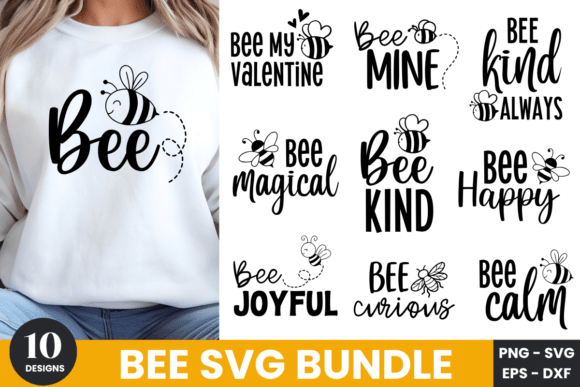
Opening the Bee SVG Bundle feels like unboxing a small jar of honey—warm, inviting, and full of quiet intention. The ten SVG files are clean, well-spaced, and clearly designed with vector precision in mind. No jagged edges, no overlapping paths, no hidden layers muddying the workflow. As an embroidery designer who’s stitched hundreds of nature-themed motifs—from florals to foxes—I immediately noticed how thoughtfully these bees balance charm and clarity. They’re not overly cartoonish, nor are they hyper-realistic. That middle ground is gold for handmade products: friendly enough for baby onesies, refined enough for boutique aprons or linen tea towels.
Stitching It Out: How Bee SVG Bundle Behaves on Real Fabric
Last week, I prepped a custom embroidered tote bag for a local café—linen-cotton blend, medium weight, natural undyed base. I chose one of the medium-sized bees from the Bee SVG Bundle and converted it into a machine embroidery design using my standard digitizing workflow. The result? Crisp satin-stitched wings, smooth fill-stitched bodies, and just enough running stitch detail in the antennae to read clearly at 3.5 inches wide. No thread breaks. No puckering. And most importantly—no “what *is* that?” confusion from customers. That matters. When you’re selling a handmade product, clarity builds trust faster than any tagline.
I also tested it on a lightweight cotton sweatshirt (looped back, medium stretch) and a curved cap front. On the sweatshirt, I added light tear-away stabilizer beneath and soft cut-away on top—just enough support to keep the bee’s rounded body from distorting. On the cap, I used a smaller version (scaled to ~2.25”) and a dense mesh stabilizer. Both held up beautifully after washing. The Bee SVG Bundle doesn’t demand heroic stabilization, but it *does* reward attention to fabric texture and hoop size. Skip the stabilizer on thin knits or dark, napped fabrics, and those delicate wing outlines will blur or sink.
Where It Shines—and Where to Pause
This bundle thrives in projects where warmth and approachability drive the sale: personalized baby embroidery (think onesies, burp cloths, nursery pillows), holiday embroidery (honeycomb-themed Christmas stockings, Easter tea towels), and small shop product lines (aprons for bakeries, kitchen towels for farm-to-table cafés). It works especially well as an embroidered patch—clean lines translate directly to crisp heat-applied or sewn-on versions.
That said, tread carefully with ultra-fine details on textured surfaces. The smallest bee in the set has tiny legs and segmented wings—lovely in PNG mockups, but potentially lost in dense fill stitch on terry cloth or heavy fleece. Likewise, avoid placing it near high-friction zones like pocket corners or waistbands unless you’ve tested durability through multiple wash cycles. And while the Bee SVG Bundle includes transparent-background PNGs ideal for printable mockups and digital previews, remember: those flat graphics don’t predict how thread sheen or stitch direction will catch light on a finished product.
Design Assets That Support Your Craft Business
As an Etsy seller and small shop owner myself, I look beyond prettiness—I ask: does this help me sell more confidently? Does it scale across my offerings without diluting brand consistency? Yes, on both counts. The ten variations give flexibility: one bold bee for a sweatshirt chest logo, a trio of mini-bees for a hem accent on a pillow cover, or a single outlined version for minimalist embroidery on a linen napkin. That variety means less time redrawing, more time fulfilling orders—and fewer customer questions about sizing or placement.
It also supports professional presentation. When buyers see consistent, well-executed bee motifs across your tote bags, baby blankets, and aprons, they subconsciously associate your shop with care and cohesion. That perception lifts perceived value—even on modestly priced items. And because the Bee SVG Bundle leans gentle rather than cutesy, it avoids aging quickly. You won’t cringe reviewing last season’s listings.
Practical Notes Every Embroidery Designer Should Check
- Test first—always stitch the chosen bee on scrap fabric matching your final project’s weight, stretch, and color.
- Check thread color contrast—especially on dark fabric. Bees with yellow-orange bodies pop best against navy, charcoal, or deep green—not black.
- Review stitch density before sending to your machine. Dense fills can overwhelm lightweight fabrics; consider simplifying wings to satin stitch only if needed.
- Confirm hoop size compatibility. Some versions may require a 4x4 hoop minimum—verify before committing to a cap or cuff placement.
- Inspect small details in both black-and-white and color mockups. Antennae and wing veins should remain legible when scaled down.
- Use proper stabilizer—lightweight cut-away for stable wovens, mesh + tear-away for knits, and adhesive-backed for layered or curved surfaces.
- Verify licensing before selling finished items or reselling digital files. This Bee SVG Bundle is a digital download only—intended for personal and commercial embroidery use, but always double-check terms.
Final Thought: Not Just a Graphic—A Quiet Brand Builder
The Bee SVG Bundle isn’t flashy. It doesn’t scream for attention. But that’s its strength. In a market flooded with overdesigned T-shirt graphics and generic clip art, this collection offers something rarer: thoughtful simplicity with real embroidery integrity. Whether you’re stitching a personalized gift, building a cohesive line of craft business merchandise, or creating custom apparel for a local brand, these bees land softly—and stay memorable. They feel handmade, not mass-produced. They say “care” before you even add your shop tag.
For designers, sellers, and makers who value clarity over clutter and longevity over trend-chasing, the Bee SVG Bundle earns its place—not as filler, but as a quietly reliable design asset in your embroidery toolkit.