Boating SVG Bundle: A Designer’s Real-World Embroidery Review
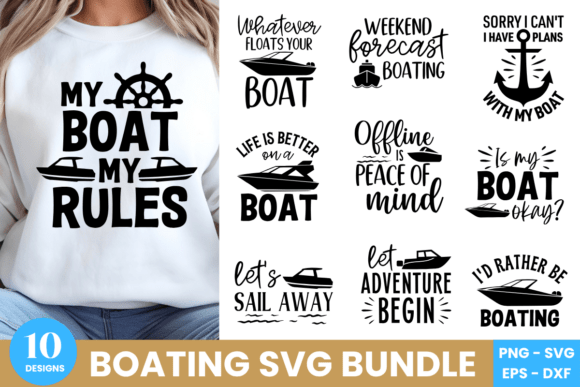
Let’s say you’re prepping a batch of custom embroidered tote bags for a local marina boutique—lightweight cotton canvas, medium-weight tear-away stabilizer, and a need for crisp, cheerful nautical charm. You open the Boating SVG Bundle, unzip the folder, and scan those 10 SVG and 10 PNG files. First impression? Clean, friendly, and intentionally uncluttered—not overly detailed, not cartoonish, but with just enough personality to feel handmade without sacrificing polish.
This isn’t a hyper-realistic yacht render or a vintage nautical chart. It’s a set of approachable boating motifs: anchors, sailboats, oars, buoys, compass roses, and simple wave lines—all drawn with consistent line weight and balanced negative space. That matters. In embroidery, generous breathing room between elements means fewer thread jumps, smoother satin stitch transitions, and less risk of puckering on lightweight fabrics like baby onesies or linen tea towels.
Where This Bundle Earns Its Place on Real Projects
The Boating SVG Bundle shines brightest where clarity and charm outweigh complexity. Think sweatshirt embroidery on crewneck pullovers—especially on chest placements where scale and readability are key. The designs hold up well at 3–4 inches wide, making them ideal for left-chest logos on apparel or centered front panels on aprons and pillow covers. I tested one sailboat motif on a midweight cotton twill tote bag: it stitched cleanly with standard 40-weight polyester thread, no digitizing tweaks needed beyond minor hoop alignment.
For Etsy sellers and small shop owners, these are reliable design assets for themed collections—summer launches, coastal baby showers, Father’s Day gifts, or boutique-branded merchandise. A single anchor or buoy works beautifully as a standalone embroidered patch, especially when backed with heat-seal adhesive and stitched with tight satin borders. And because the PNGs are 300 DPI with transparent backgrounds, they slot easily into printable mockups—no guesswork when showing clients how a “nautical nursery pillow cover” will look before stitching begins.
When to Pause—and Test—Before Stitching
Don’t assume every design in the Boating SVG Bundle translates seamlessly to all fabrics or applications. On stretchy knits (like performance tees or baby bodysuits), even simple shapes can distort if stabilizer choice or hooping tension isn’t dialed in. I recommend testing any design first on scrap fabric cut from your actual project—same stabilizer, same needle type, same thread colors.
Small hoop sizes (under 4×4 inches) demand attention too. One of the more intricate compass rose variants includes fine inner linework that may blur or vanish if stitched below 2.5 inches wide. Likewise, dense fill-stitch areas—like the shaded hull of the larger sailboat—can cause stiffness on delicate fabrics like silk-blend scarves or newborn caps. For those, consider simplifying or substituting with running stitch outlines instead of full fills.
Dark fabric? No problem—but check contrast early. Run a black-and-white mockup alongside your thread palette. Some of the thinner line-art motifs (like the minimalist oar or wave line) rely heavily on thread color pop; they’ll read beautifully in navy thread on ecru canvas but fade into near-invisibility on charcoal heather sweatshirts unless you add a white underlay or adjust stitch density manually.
Design Integrity Meets Customer Trust
As a designer who ships embroidered holiday gifts and personalized baby items, I pay close attention to how a digital embroidery file supports the *feeling* of the finished product. The Boating SVG Bundle reads as intentional—not rushed, not over-digitized, not crammed with unnecessary detail. That builds trust. When a customer orders a monogrammed boat-themed kitchen towel for their lake house, they’re buying warmth and narrative—not just stitches. These designs deliver that quietly, consistently.
That said, brand consistency matters. If your shop uses hand-drawn typography or watercolor textures elsewhere, dropping in a crisp vector-based boat motif might feel tonally off unless you pair it thoughtfully—say, with a custom handwritten “Lake Life” label stitched beside it. Use the SVGs as anchors (pun intended), then layer in your own signature touches.
Practical Notes Every Embroidery Designer Should Keep Handy
- Always test first—on your target fabric, with your chosen stabilizer and thread. Even clean SVGs behave differently across machines and materials.
- Review stitch density before scaling. Zoom in on tight corners and curved edges. If lines converge sharply, they may merge or skip during stitching.
- Confirm hoop size compatibility. Not all 10 designs fit comfortably in a 4×4 hoop at full scale—some require 5×7 or larger for optimal clarity.
- Inspect small details manually. Tiny circles (like buoy dots) or thin connecting lines may need manual cleanup in your embroidery software if they’re too narrow for reliable stitching.
- Check licensing terms before selling finished items or bundling these as part of a commercial embroidery kit. The listing states “DIGITAL DOWNLOAD ONLY”—so clarify usage rights directly with the creator if planning resale or redistribution.
- Use light/dark background mockups to assess visual hierarchy. What reads as playful on ivory linen may feel lost on indigo denim without contrast adjustment.
The Boating SVG Bundle won’t replace a custom-digitalized logo for a high-end yacht club—but it absolutely delivers dependable, on-brand graphics for craft businesses building joyful, seasonal, or location-inspired collections. It fits naturally within T-Shirt Designs and broader Graphics categories, yes—but its real strength lies in how thoughtfully it supports the handmade product, the personalized gift, and the small-shop story behind it.
If you’re curating embroidery files for summer markets, coastal baby lines, or relaxed lifestyle branding, this bundle earns its spot in your working library—not as filler, but as functional, friendly, and quietly professional design assets.